Office window treatments fail for different reasons than domestic ones. Nobody complains that an office blind is the wrong shade of beige; they complain that they cannot read their screen at 3pm, that the room is too hot near the window, or that six of the twelve blinds no longer operate.
So the specification starts from the operational brief, not from appearance.
Start from the actual problem
Before choosing a product, establish four things:
- Orientation. Which way does each façade face, and at what time of day is it a problem?
- Task. Screen-based work, meetings, reception, or a mix on the same floor?
- Who operates them. Individual desks, or facilities staff on a schedule?
- Cleaning regime. Who cleans them, how often, and with what?
Two identical-looking window runs can need different specifications purely because one faces west and the other faces a shaded courtyard.
Screen glare
Glare is the complaint that generates the most emails. It comes in two forms: direct sun falling on a screen, and a bright window in the field of view behind a screen, which forces the eye to constantly readjust.
The instinctive fix — a blockout blind, closed — solves glare by removing the daylight and the view, which tends to make an office feel worse. The better answer is usually a sunscreen roller blind or a Venetian blind:
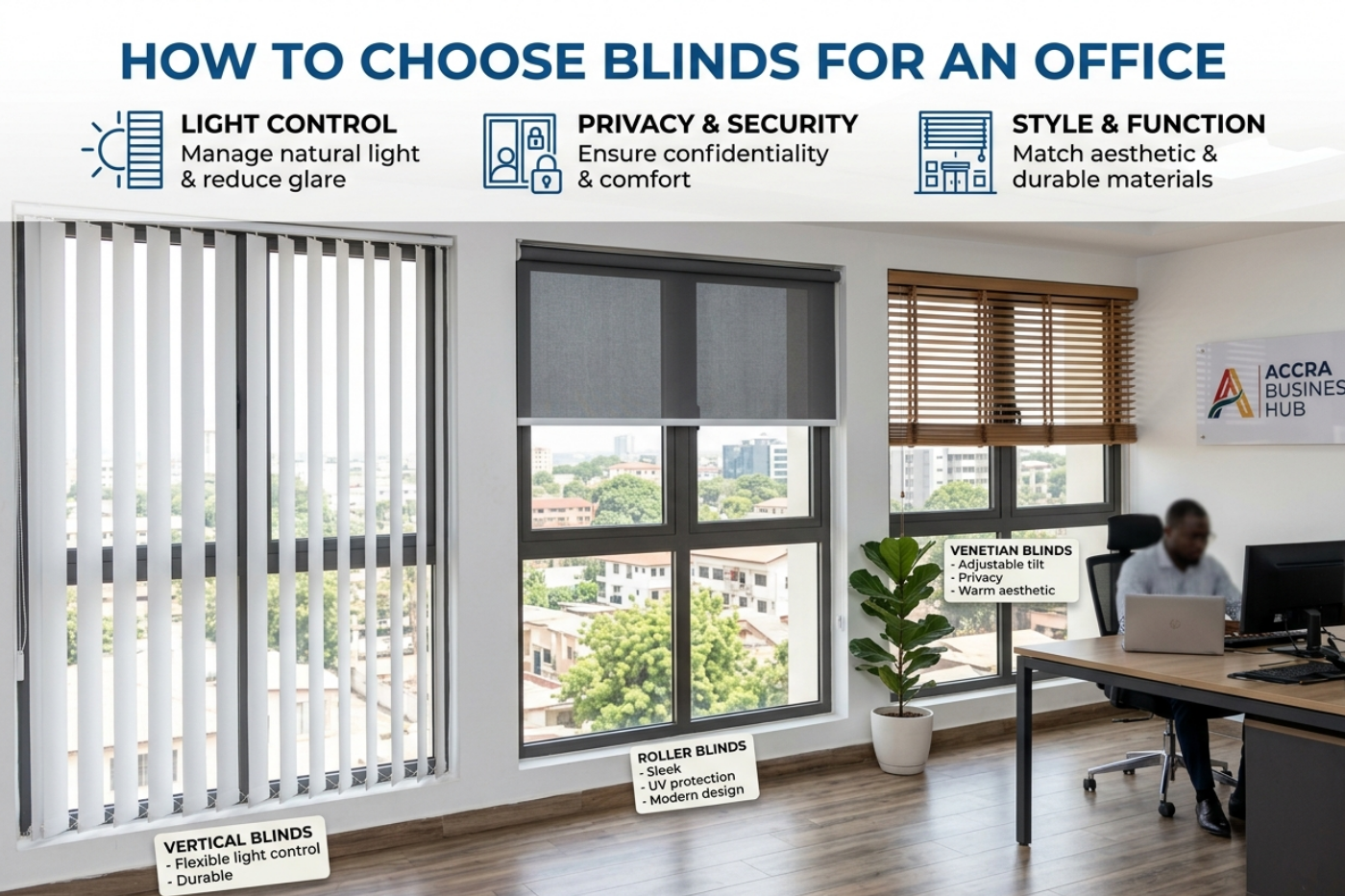
- A sunscreen roller cuts brightness and UV while remaining semi-transparent, so the room stays daylit and the view survives.
- A Venetian lets staff tilt the slats to bounce light up onto the ceiling — glare gone, brightness kept.
Heat gain
In Ghana's climate, west- and north-facing glazing can make the desks nearest the window uncomfortable and push the air conditioning harder than the rest of the floor requires. Two specification choices help:
- A fabric with a reflective or light-coloured backing, which sends more solar energy back out through the glass.
- A lower openness factor on the worst-affected façade only, rather than across the whole floor.
A blind will not substitute for solar-control glazing or external shading, but on an existing building it is the cheapest meaningful intervention.
Comparing the systems
- Roller blinds — the commercial default. Simple, few moving parts, minimal maintenance, neat when raised, easy to replace one unit without touching the rest.
- Venetian blinds — the best light control available, and easy to wipe. More moving parts, so more to maintain in heavy use.
- Vertical blinds — the answer for long runs and full-height glazing, and they clear doorways. Individual louvres can be replaced cheaply if damaged.
- Roman blinds — softer and quieter, appropriate for boardrooms and executive offices, less so for open-plan floors in daily use.
Fabric openness factor
For roller blinds, openness factor is the percentage of the fabric that is open weave. It is the number that determines how the blind behaves, and it is worth understanding before signing off a sample:
- 1–3% — strong glare control, view largely obscured. Suits severe west-facing exposure.
- 5% — the usual compromise for general office work. Good glare reduction, view retained.
- 10% — bright and open, with modest glare control. Suits shaded or north-facing façades.
Darker fabrics preserve the view better; lighter fabrics reflect more heat but can themselves become a bright surface in the field of view. Which trade-off is right depends on the façade.
Specifying across a floor
Consistency is what makes an office fit-out look professional. A few rules we apply:
- One fabric family across the floor, varying the openness factor by façade rather than mixing appearances.
- All blinds aligned to the same head height, even where window heads vary — the eye reads the line, not the windows.
- Control chains on a consistent side throughout, so operation is predictable.
- Wide runs split into equal units rather than one oversized blind, which is heavy to operate and expensive to replace.
We also recommend keeping a small stock of spare units and components on handover. Replacing one blind two years later from the original specification is far easier than matching it from scratch.
Cleaning, wear and safety
Specify for the cleaning regime you actually have. Sunscreen and PVC fabrics take a damp cloth; textured fabrics hold dust and need vacuuming, which in practice often means they do not get cleaned at all.
Where an office is used by children — a school, a crèche, a family-facing reception — chain and cord safety devices should be fitted and checked. This is a standard requirement, not an upgrade.
For a floor-by-floor specification, send us the building layout with façade orientations marked, or ask us to visit and survey. Commercial enquiries are welcome at any scale.